Fine Turgrass Management

Fine Turgrass Management

Steve Cook, CGCS, MG - Director of Agronomy

Showing posts with label Maintenance Issues. Show all posts

Thursday, August 7, 2014

Night Shift

This year we implemented an afternoon shift to help alleviate some of the infrastructure issues we face with an inadequate maintenance facility. By moving some of the work to the evening we free up space and equipment. It also allows us to get a "dry cut" on the range tee and moves some of this disruptive maintenance away from the morning when player access is most demanding.

As with anything we do, no strategy can succeed without great staff to implement it. I want to thank the wonderful Team we put together to accomplish this evening maintenance and they are listed below in the photo. Through rain and heat - sometimes both - these rookies did a great job. Thanks Team!


L-R
Jeremy Glod , Justin Mooney, Matt Andrus, Sean Nesbitt

Monday, May 13, 2013

Course Update


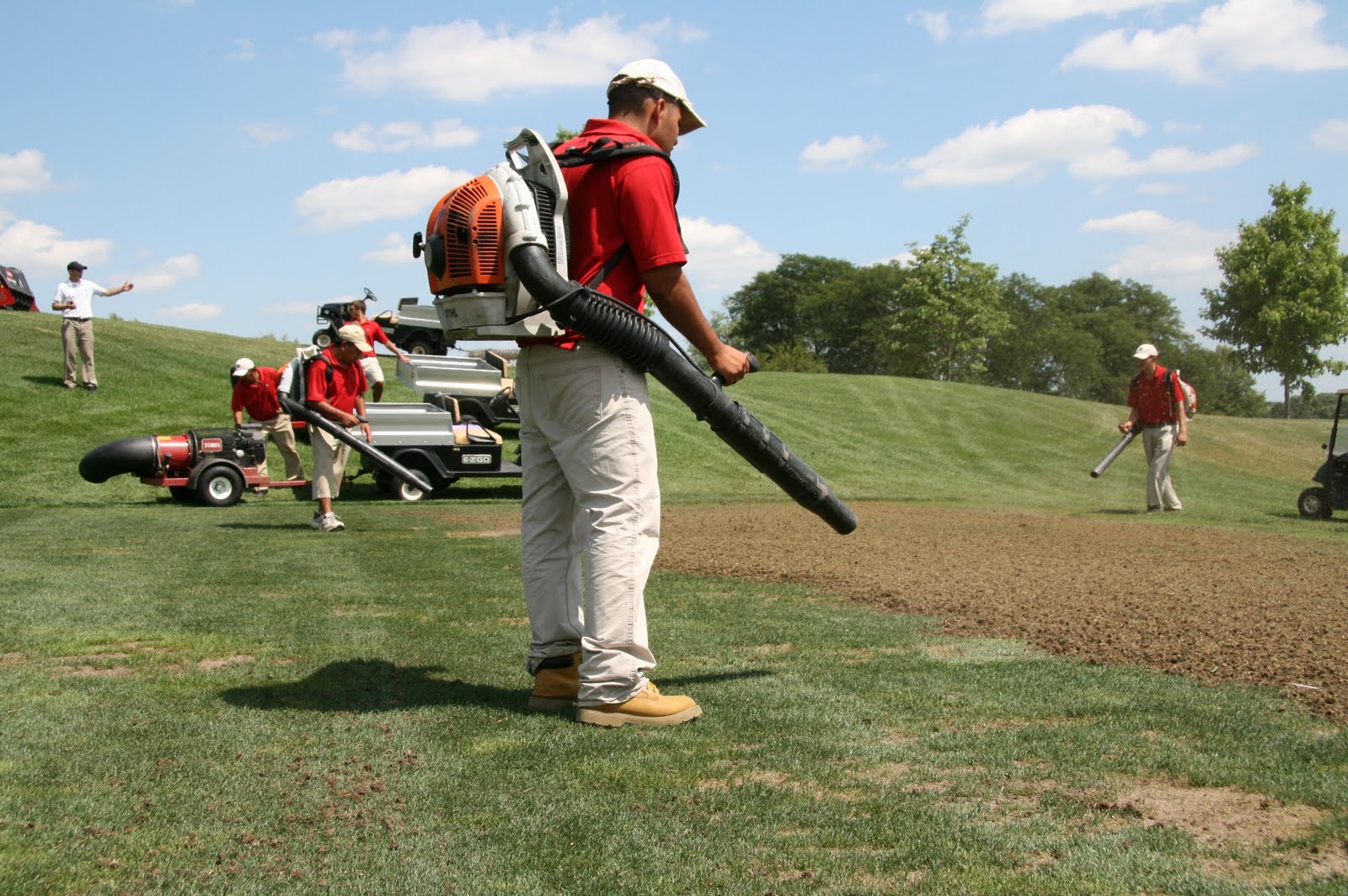
Today both courses were closed for necessary maintenance activities. In the absence of play our efficiency increases and it means these tasks are not done during the week in play. Here is a partial list of the agronomic and maintenance practices we accomplished today:

Topdressed both North and South greens.
Applied granular nutrient products to North greens.
Sprayed South greens twice with fungicides and fertility products.
Topdressed approaches South Course.
Excavate holes for new  trees North Course.
Tree removals North Course.
Stumphole cleanup.
Fairway divots.
Training of new staff.
Install flowers at clubhouse.
Routine mowing.
Driving range maintenance: divots/edging/bunkers etc.


Monday, July 16, 2012

Teamwork

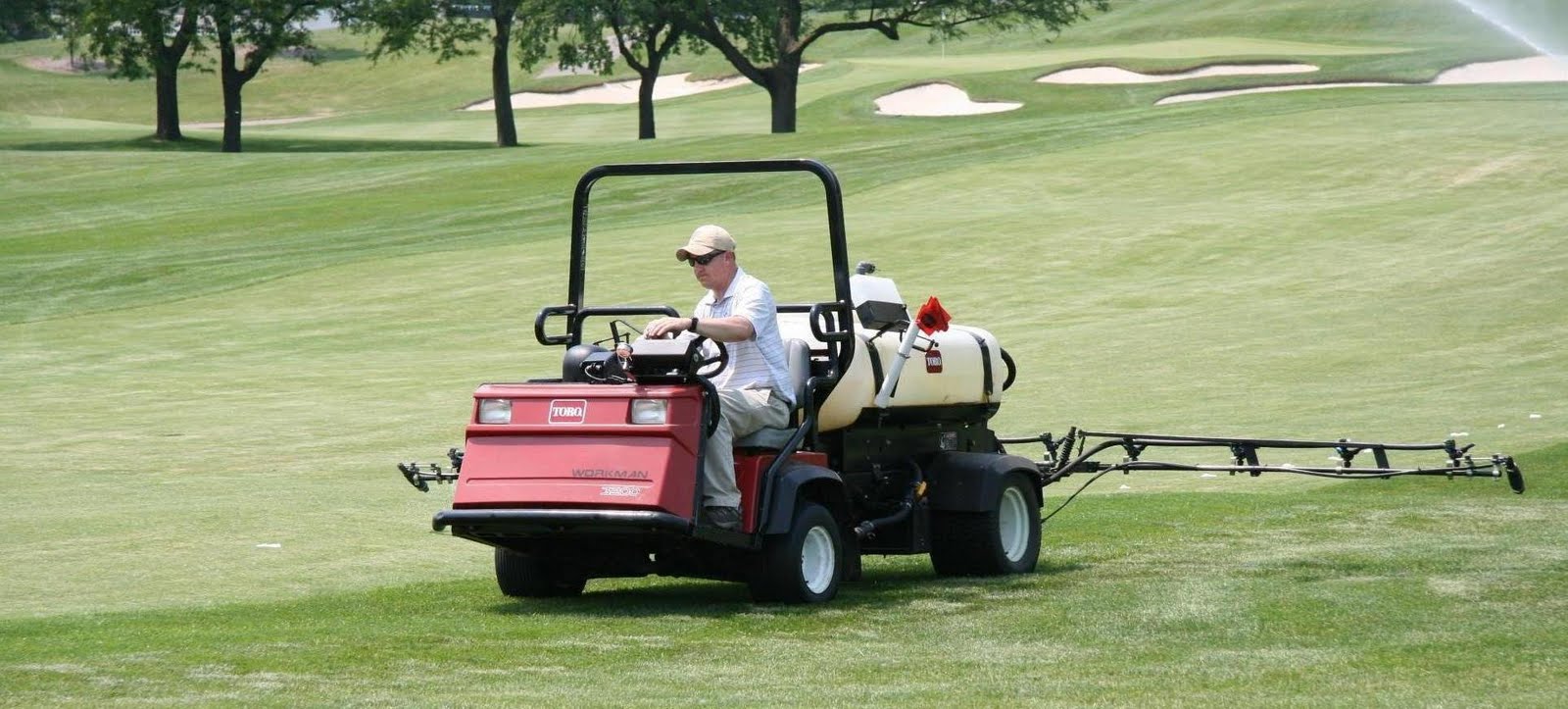
Spraying fairways on a Saturday or Sunday night is not an ideal option. But sometimes the weather dictates that choice. With hot, humid evenings the risk of turfgrass disease (fungus) is greater and to avoid the worst case scenario we sometimes cannot take the chance of waiting until the following morning to spray.

Such was the choice we made last night. We sprayed all of the South Course fairways to prevent Pythium, a devastating disease that can wipe out a stand of grass overnight.

To accomplish this, we need to delay or stop play so the sprayers can apply the product unhindered by golf traffic. So with the help of the Golf Services staff we were able to redirect play and get the fungicide applied in a timely manner. Teamwork matters.


Tuesday, June 12, 2012

Range Tee Practice

Ty McClellan from the USGA has written a very good article about range tee divot patterns. I have included a link below.

Managing the divot pattern can go a long way towards helping the grounds staff keep the best turf possible on our range tee. With unlimited usage, the undersized tee cannot withstand the amount of play it receives. By utilizing the divot pattern recommended by the USGA, we can provide a much better playing surface.


http://gsr.lib.msu.edu/article/mcclellan-practice-6-8-12.pdf


Thursday, October 27, 2011

Cart Access

Legitimate questions have been asked about cart access after rain events. We are responsible for making the decision regarding carts, so let me explain the process:

Member access is the ultimate goal. We try to err on the side of allowing carts, even when it's too wet. We're in the service industry, so servicing members is our role. The sole question we ask ourselves is: will the members who play tomorrow, be proud of the golf course?

Financial considerations do not factor in. Nor whose name is on the tee sheet, nor the day of the week. Usually, when there are no carts on the South, carts are allowed on the North so the members have someplace to ride. All outside events get the same consideration. We have canceled two outside events this year due to wet course conditions.

Rain events in the summer are different from the fall. In summer, long days, high temperatures and actively growing grass remove water quickly. We routinely allow carts the day following a 1" rain in the summer.

Rain events in the fall occur with less daylength, cooler temperatures and turf that cannot "drink up" the excess water because it is not growing. One tenth of an inch of precipitation in the fall under these conditions is enough to cause wet conditions.

May 1st - September 30th:

Total precip: 20.87"
Avg for this period: 16.50"
No carts North Course: 5 days
No carts South Course: 20 days
5 total days where members had no access to golf with a cart

Friday, August 5, 2011

Fungicide

Fungicides are pesticides, or plant protectants, that kill or prevent the growth of fungi that cause disease. Preventative treatment is preferable on greens and tees as lower rates can be used if you are ahead of the disease. On fairways, this approach is more expensive because the acreage is larger: we have 8 acres of greens as opposed to 60 acres of fairways.

Greens are sprayed every week and fairways are sprayed as needed, about every 14 to 21 days in the stressful period of summer, Memorial Day to Labor Day.

Monday, August 1, 2011

Driving Range Tee

With limited space and exceptional use, the range tee is taking a beating. In 90 degree heat, little if any seed will germinate so the tee has begun its inexorable march downward.

However, that doesn't mean we've given up and we still are giving it the "full court press" until cooler weather arrives. Today we aerified and overseeeded, fertilized and watered. It's a little hot to be aerifying but I think it's worth the risk to get some recovery.

I would expect excellent recovery later this fall.


Friday, July 22, 2011

Hand Watering

Hand Watering vs. Syringing
by Shane Lohman, ISU Turfgrass Intern


Hand Watering and Syringing are two very essential watering practices used on greens during high stress periods.

Hand watering is normally done in the morning with the sole intent to move water down into the root zone for uptake by the turf.

Syringing is typically done during the midday heat to cool the leaf tissue and to remove sugars released during photosynthesis. Syringing the turf is a light application or misting that does not allow the water into the root zone.

Both of these techniques are of vital importance in maintaining consistent dry surfaces without the use of sprinkler heads. These practices allow the application of water to go exactly where it is needed.

Hand watering and/or syringing cannot be scheduled around play, and can occasionally cause some minor inconveniences to the players. Not allowing these timely needed cultural practices to avoid disrupting play can lead severely stressed turf or even turf loss.

Monday, June 27, 2011

Topdressing

Today we topdressed the North greens.

Topdressing with sand is the most effective means of diluting thatch on putting surfaces. There are additional benefits:
  • smooths the putting surface
  • helps eliminate or minimize "grain"
  • provides a firmer surface
Light and frequent topdressing is preferred as long as there is access to the golf course to get it done. We avoid topdressing on days when the temperatures are in the high 80's or low 90's due to the abrasive stress on the turf.


Friday, June 24, 2011

Square Tees

The Green Committee has discussed the possibility of converting our "free form" tees to "square tees". Square tees were prominent when Oakland Hills was built and are a feature on many traditional golf courses.

In an attempt to see if this is feasible, yesterday we converted #18 tee on the North Course from free form to square. This will give us the road map we need to calculate the costs and timeline to get the work done. The tees can be converted back at any time.


Saturday, June 18, 2011

Lawn Clippings

I have had several people ask about catching clippings when mowing, either here at the course or at home. Contrary to popular belief, returning leaf clippings does not substantially contribute to the buildup of thatch as leaf tissue is composed of about 90% water. (Over fertilization is the main culprit to thatch accumulation.)

Returning clippings adds needed nutrients to the soil.  Research has shown that lawns where clippings are returned have a darker green color and need less Nitrogen. It is also good for the environment: removed clippings must be either stockpiled or composted.


Tuesday, June 14, 2011

Monday Projects

The importance of allocating time for the Golf Course Staff to do important maintenance cannot be understated. Sometimes it seems like us "greenskeepers" are pressing too hard to get the course closed one day per week to get some of this stuff done. Because we close the South Course to play after outings, here is a list of stuff we were able to do yesterday after the event finished:

  • sprayed South fairways
  • sprayed North Course greens
  • aerified range target greens
  • renovated 5 range bunkers
  • trimmed and edged South bunkers
  • topdressed South Course greens


Saturday, June 11, 2011

Course Update

.33" of precip last night was a welcome relief for both courses. A little rain and cooler night temperatures helped the turf to recover from the prior week of heat.

Since we missed topdressing greens this past week, that is on the schedule for the South Course on Monday. With the Member/Member next weekend, most of the upcoming week will be course preparation.

The driving range tee is taking a beating. In order to have good turf on the tee in August, we'll need to use the front pad and the matts more often.

Wednesday, June 8, 2011

Wetting Agents

Wetting agents are surfactants.They act by modifying the surface tension between water and another surface, like leaf blades or soil particles.

A wetting agent is a product used in golf course management to increases the ability of water to penetrate soils. It decreases the surface tension of soil particles making it easier for water to infiltrate and spread through the soil profile. It makes water more efficient.

We use wetting agents on both courses to improve the effectiveness of nightly irrigation. In periods of stress, the improved water effectiveness helps us combat dry spots when we hand water. It also helps roots get the water they need to keep the grass plant alive.


Tuesday, June 7, 2011

Heat Stress

It may seem odd after that much rain in April and May but the golf courses are VERY dry and it shows. The South fairways in particular are struggling although, this is temporary. We were obligated to mow them last week when they were still a bit soft and that resulted in some scalping.

Scalping occurs when you mow off most of the leaf tissue and below the growing point of the plant. Not good. We raised the mowing height on fairways until we get through this stretch of weather and until the turf recovers, maybe next week.

The greens are doing fine, the annual bluegrass seed heads have died, turned brown and will soon disappear.

Saturday, May 21, 2011

Annual Bluegrass and the South Greens

The South Course greens are composed of a mixture of several varieties of older bentgrass and Annual Bluegrass or "poa annua".

Annual bluegrass is more prolific and competitive under an ecological regime of close mowing, light frequent irrigation, high fertility, and moist soils. It is a winter annual that germinates in late summer/early fall, once soil temperatures have dropped below 70 degrees F. Seedlings mature in the fall, overwinter in the vegetative state, and produce seed in late spring and early summer. Some germination of annual bluegrass seed also occurs in the spring. The seed may lie dormant in the soil for many years before germinating, resulting in a significant build-up of indigenous seed overtime. It tends to be more prolific during wet seasons. Annual bluegrass often dies in the heat of the summer due to heat and drought stress, disease, and/or insect damage.


Annual Bluegrass is a prolific seed producer in the spring, giving the putting surface a white appearance. This seeding also causes the bumpiness you see and feel. In 10 - 14 days the seeding will subside and the greens will return to normal.

Thursday, May 19, 2011

Mowing Rough

A challenge in the spring is keeping up with mowing the rough. We have 5 rough mowers operating 10 hours a day and 6 hours Saturday and Sunday ... if the ground conditions permit. Losing 1 day to weather makes it virtually impossible to reschedule those lost 50 man-hours and so we find ourselves playing "catch up" most of the time.

Combine that lost mowing time with the annual seed head production of bluegrass and ryegrass  and you have very thick, long rough and difficult playing conditions.

The bottom line is that rough grows aggressively in the spring, even in the absence of fertilizer applications. The result is difficult playing conditions, and this occurs every year. The only solution is to hit the ball in the fairway, play hard when it is in the rough, and know that the growth rate of the grass will slow down as spring progresses into summer.

We'll keep the blades turning as frequently as we can and drier weather will be here soon.

Friday, April 8, 2011

Soil Temperature and its Impact on Turfgrass Growth

Turfgrass needs 4 things for healthy growth: temperature, sunlight, water and air. In the spring, temperature is most often the limiting factor. We monitor soil temperature because it's an excellent indicator of impending activity. It tells us when we can expect to start mowing, when it's time to schedule fertilizer and fungicide applications, weed growth etc.

Growth is optimum when soil temperatures are between 50 and 65 degrees. When temperatures in the soil exceed 70 degrees (mid-summer) root growth slows and stress on the grass plant increases. During these summer periods we might use other methods to help the turf survive, like raising mowing heights.

Soil temperatures this week are in the 50 degree range, so we know growth will soon take off and mowing is a couple of days away. It also tells us it's time to make initial fungicide applications targeted to specific diseases, active above that 50 degree buoy. We'll be making those applications during the next seven days.

Thursday, November 18, 2010

Late Fall Fertilization


The application of Nitrogen in late fall can serve as a replacement for an early spring application. After leaf growth stops in late October or early November, root growth continues because soil temperatures remain high enough to promote root activity. This allows available carbohydrates (food) to be stored in the roots for use in warmer temperatures the following spring. Surface temperatures are cold enough that the Nitrogen is not used by the plant to "push" unnecessary foliar growth.

Monday, November 15, 2010

Snow Mold Applications


There are two types of "snow mold" fungi that cause damage: Pink Snow Mold and Gray Snow Mold. Pink, is the more serious one and infects the crown of the grass plant. Gray Snow Mold affects the leaf blade and is generally considered the less harmful of the two.


Snow mold fungi are active at temperatures just above freezing in moist conditions. These conditions occur most frequently under snow cover or anything else that covers the grass, such as fallen tree leaves. Gray snow mold usually only occurs after prolonged snow cover and seems to be more prevalent in shady areas. Pink snow mold may be active in cool, wet conditions from late fall through early spring.


In late fall, we apply fungicides at rates high enough to keep the damage under an economic threshold, but not high enough to completely eliminate the diseases.